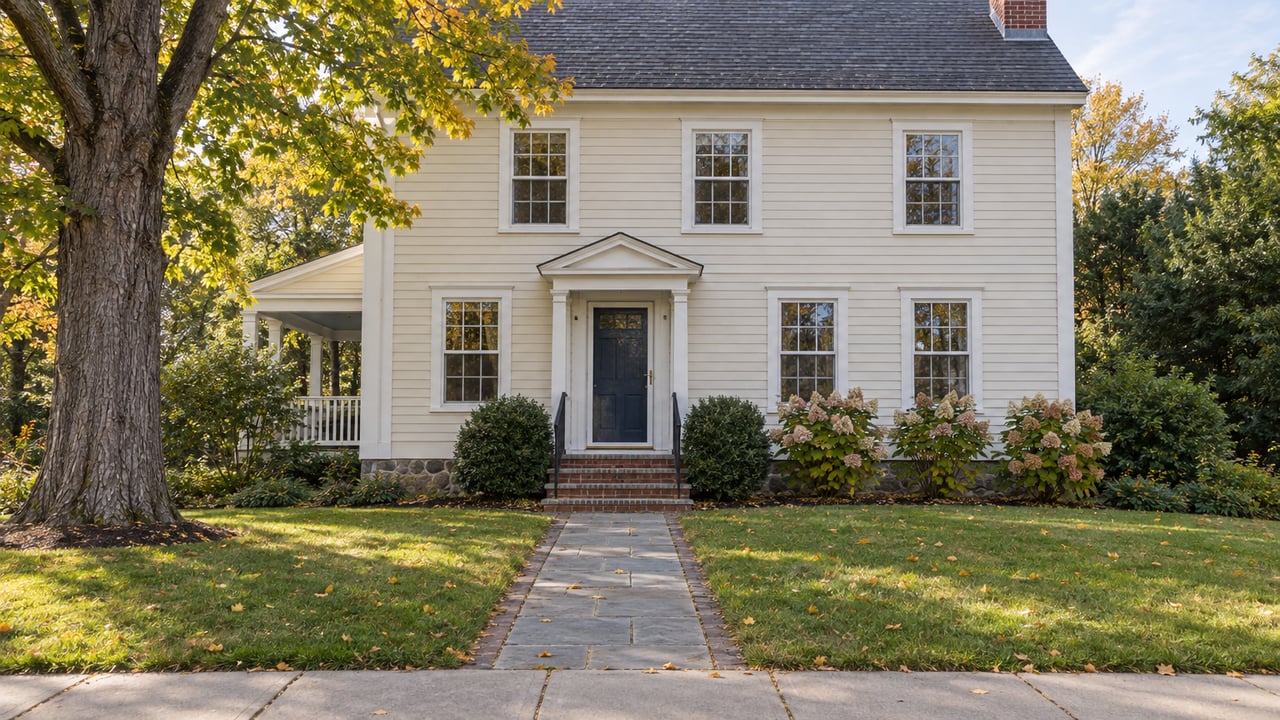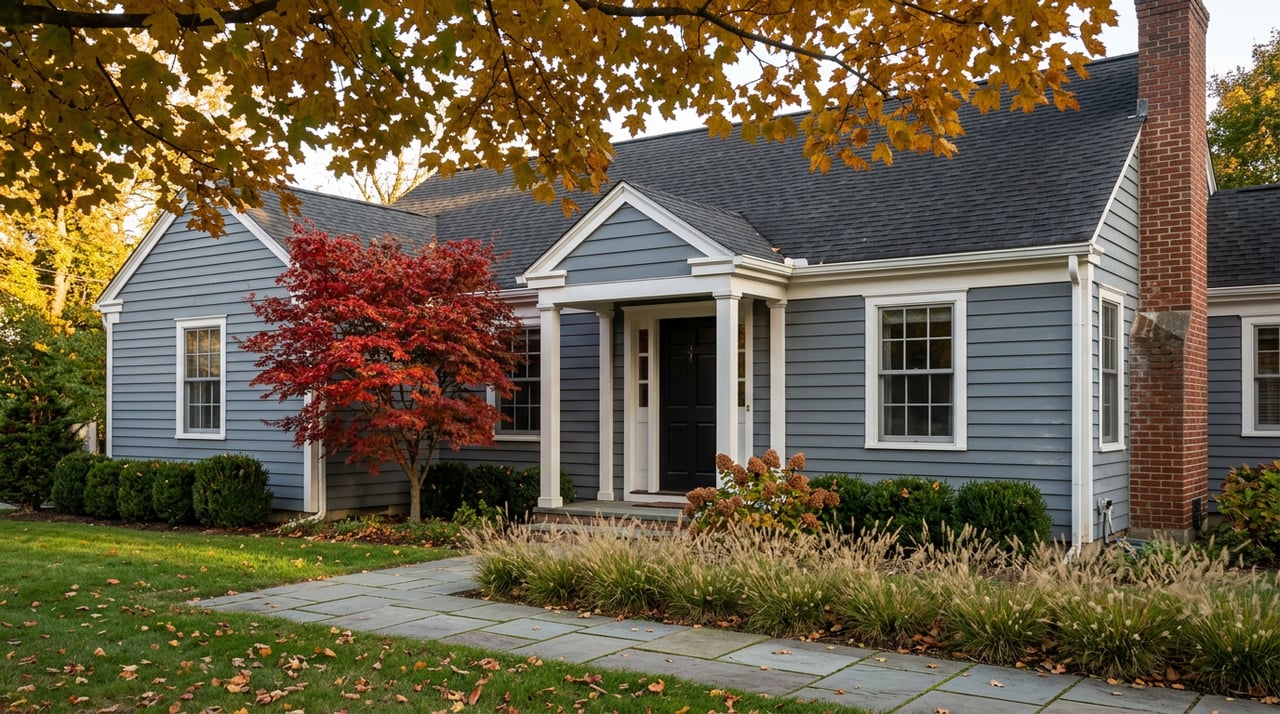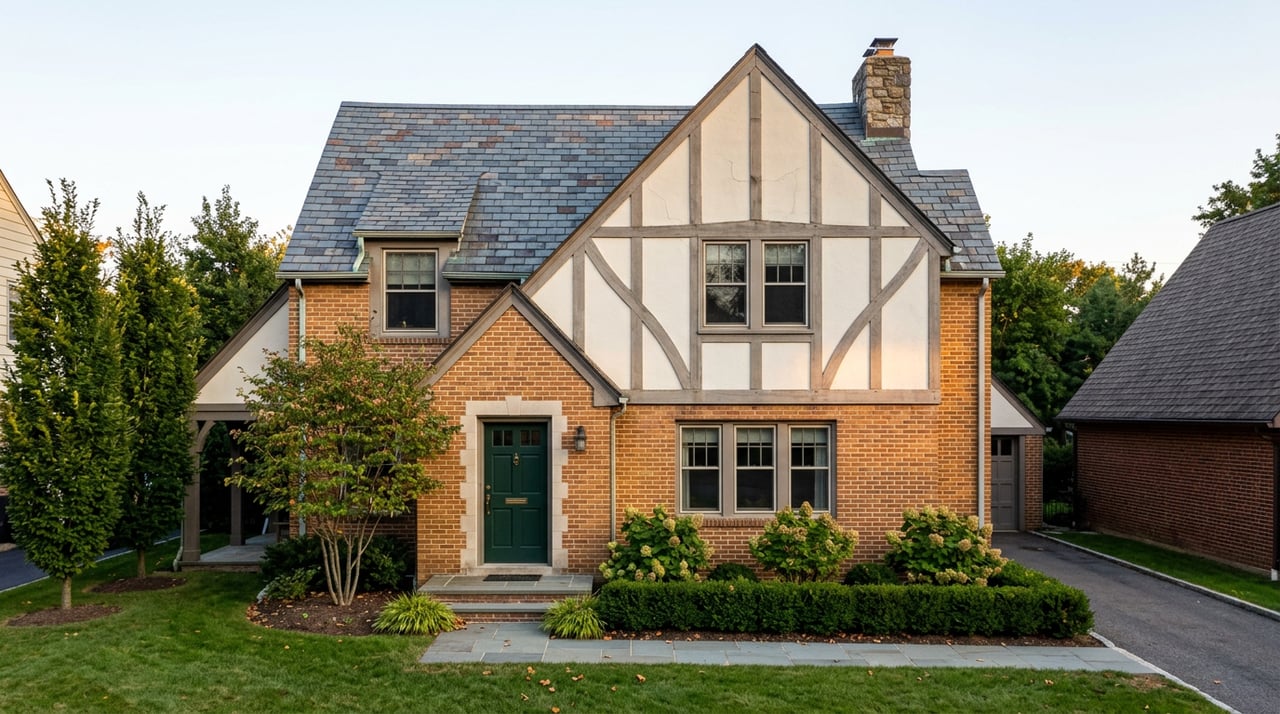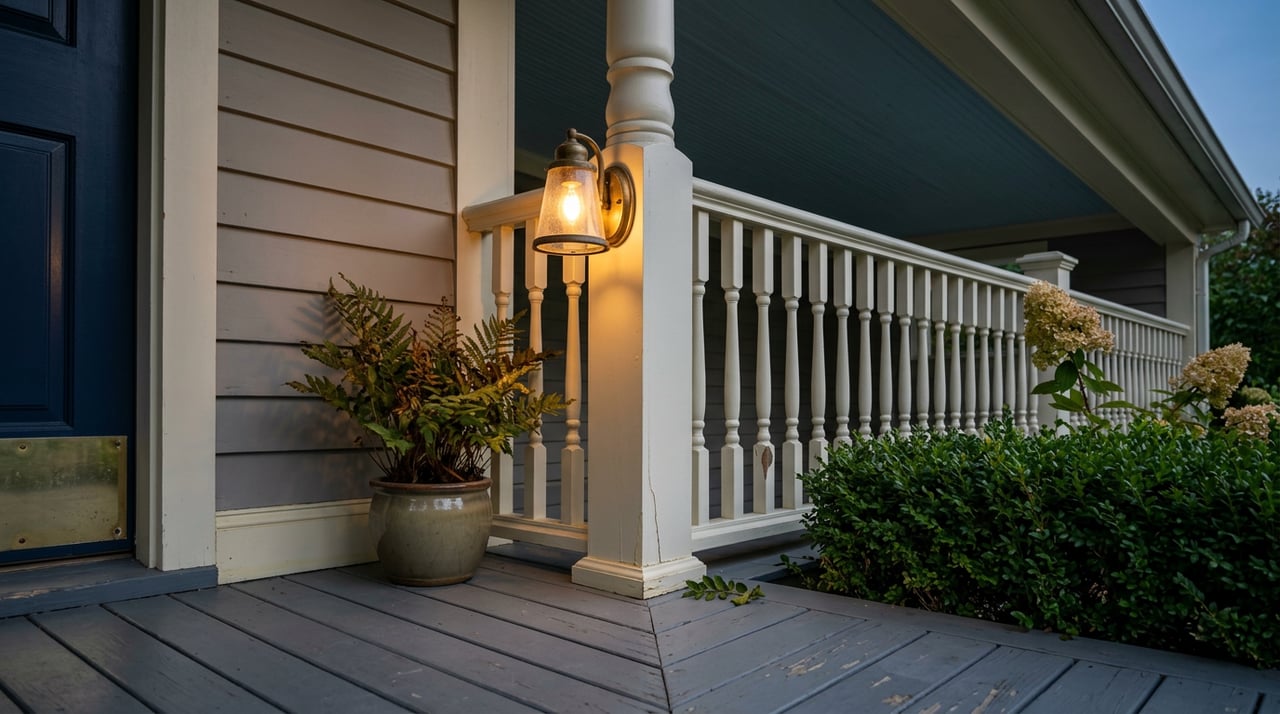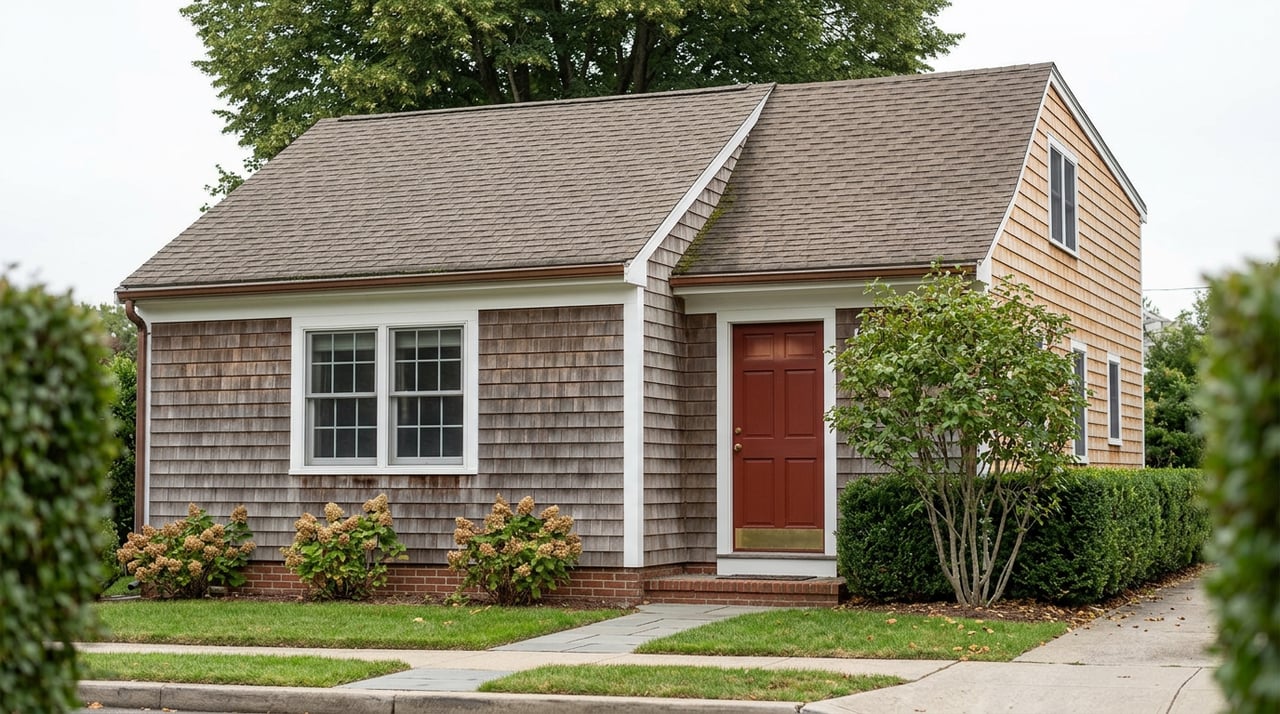
A homeowner on an Arlington corner lot wanted one thing this summer: a small roof over the front steps, enough to keep rain and afternoon sun off anyone standing at the door. It sounds like the kind of project a contractor pulls a permit for on a Tuesday and finishes by Friday. Instead it went to the Zoning Board of Appeals on July 28, because the property sits where two streets meet, and in Arlington a corner lot carries two front setbacks instead of one. What should have been a weekend job became a special permit case.
That single hearing says more about buying an older home in Arlington than any median price chart. If you are comparing this town to Belmont, Medford, or Watertown and picturing a fixer-upper with "room to grow," the real question is not whether the lot is big enough. It is whether the lot still conforms to the rules that govern additions at all.
The math on Arlington's lots
Arlington is not adding new single-family homes. The town is fully built out, wedged between Cambridge, Belmont, and Lexington with no vacant land left to develop at scale. Town planning data puts the median year of construction at 1931, with more than half of the housing stock built before 1939. Roughly 48 percent of units are single-family, about 30 percent are two- to four-family homes, and the rest sit in larger multi-unit buildings.
That vintage matters because zoning dimensional requirements have changed since most of these houses went up. A lot that was perfectly conforming in 1931 can be nonconforming today, meaning any addition that touches an existing setback line has to go in front of the Zoning Board rather than get approved over the counter. The Arlington Zoning Board of Appeals hears exactly these cases: special permits, variances from the zoning bylaw, and appeals from the building commissioner's decisions. Applications run $400, and getting on the calendar is a matter of months, not days.
Corner lots carry an extra wrinkle. Arlington's zoning bylaw defines a corner lot as one sitting at the junction of two intersecting streets, and that definition triggers a second front setback most buyers never think to check. A straightforward addition on an interior lot might sail through. The identical addition on a corner lot, three doors down, can land in front of the board.
Three cases, one summer
Recent Zoning Board activity shows how often this comes up, not as an edge case but as routine business.
| Address | Project | What triggered review | Status as of this summer |
|---|---|---|---|
| 19 Lancaster Road | Second-story addition | Addition extends into the right side yard setback | Approved unanimously, June 9, 2026 |
| 14 Orchard Terrace | Two-story enclosed porch addition | Addition intrudes on setback lines | Hearings concluded June 23; board signaled likely approval, vote calendared for July 14 |
| 25-27 Heath Road | Second driveway | Additional curb cut under residential zoning rules | Hearings concluded June 23; board signaled likely approval, vote calendared for July 14 |
| Corner lot, address not disclosed in town coverage | Small roof over front steps | Corner lots carry two front setbacks | Heard July 28, 2026 |
None of these are unusual renovations. A second story, a porch, a driveway, a roof over a doorway. What they share is a lot shape old enough, or positioned oddly enough, that the addition needed a public hearing before a shovel could go in the ground.
A roof over a front door does not sound like it should need town approval. On a corner lot in Arlington, it does.
Why the friction exists at all
This is not bureaucratic overreach for its own sake. Setback rules exist to keep buildings a consistent distance from the street and from each other, preserving light, sightlines, and the character of a block that was mostly laid out before cars were common. On an interior lot, that means one front setback to track. On a corner lot, it means two, because the house faces two streets whether the owner thinks of it that way or not.
The same logic extends to accessory dwelling units, which have become a more common way for Arlington owners to add living space or rental income without a full addition. Attached and detached ADUs both require a special permit, and a detached unit has to maintain at least a 10-foot setback from the primary building, on top of meeting the zoning district's own side and rear setback rules. Only one ADU is allowed per lot, and either the owner or a family member has to occupy the primary residence or the ADU itself. None of this is impossible. It just means the process is longer and more procedural than "buy the house, hire the contractor."
Here is the part that connects back to price. Arlington's structural scarcity, the fact that there is no new single-family construction pipeline, is part of why the market holds up even when broader rate conditions get harder. As of spring 2026, market reports pegged Arlington's active listing count at roughly half of what it was a year earlier. In a report covering year-to-date 2026 activity published in early August, single-family homes closed at an average of $1.51 million across 58 sales, up from $1.39 million over the same period last year, moving at roughly 1.4 months of supply and averaging just 10 days to offer. Condos closed at an average of $940,000 across 96 sales, up from $928,000, though they moved more slowly, averaging 28 days to offer. Both segments sold above asking on average.
Price varies sharply by pocket. Listing data reported earlier this year showed Arlington Center running around a $1.4 million median, East Arlington near $950,000, Arlington Heights around $907,000, and the Brattle area closer to $849,000. That spread often maps onto lot age and shape as much as square footage. A buyer stretching into the Heights or Brattle for a lower entry price is frequently buying into the same pre-1939 lot patterns that generate ZBA cases like the ones above. The lower price is not a shortcut around the zoning question. It is often the same question at a different number.
What this means before you write an offer
If an agent, a listing description, or your own walkthrough points to "expansion potential," treat that phrase as a starting point for research, not a settled fact.
- Ask whether the lot is a corner lot. If it is, assume two front setbacks apply, not one.
- Ask how old the structure is and whether previous owners pulled permits for additions. A house with an undocumented addition may already be sitting closer to a setback line than it appears.
- Build ZBA timing into your renovation plan. A special permit case can take a full season from application to final vote, based on this summer's calendar.
- If an ADU is part of your plan, confirm occupancy requirements and the 900 square foot size cap before you budget for one.
- Compare renovation runway, not just price, when weighing a cheaper lot in one Arlington neighborhood against a pricier one in another.
None of this should scare a buyer away from an older Arlington home. It should change what "potential" means when you're comparing it to a newer property in a neighboring town where the same addition might not need a hearing at all.
A few quick questions
Does this apply to condos? Setback and special permit rules generally apply to the lot and structure, which matters most for single-family and two-family properties. Condo buyers should still ask about any building-wide additions or shared-space changes, since those can trigger their own review.
Does every corner lot need a permit for any project? No. The trigger is whether the specific addition intrudes on a required setback, front or side. A project that stays within existing lines typically does not need a special permit.
Is this unique to Arlington? Older, land-constrained towns across Greater Boston deal with similar setback friction. Arlington's version is sharper because so much of its housing stock predates current zoning and there is no new land to build on instead.
If you're weighing an older Arlington home against something newer in a neighboring town, or trying to figure out how much renovation runway a specific lot actually has before you write an offer, that's exactly the kind of groundwork worth doing with someone who tracks this market closely. Kelly Batti can walk through what a specific address's zoning history means for your plans. Let's Connect.